At Yubhel Fabrications & Engineering Works, we don't just supply belts; we provide the lifeline of your production process. We specialize in the sourcing, customization, and delivery of high-performance conveyor belting designed to meet the rigorous demands of the mining, construction, recycling, and manufacturing sectors.
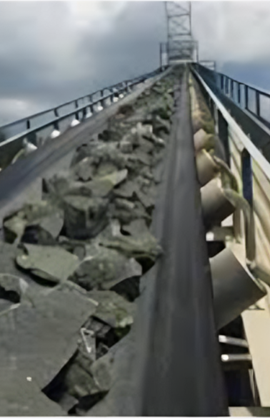
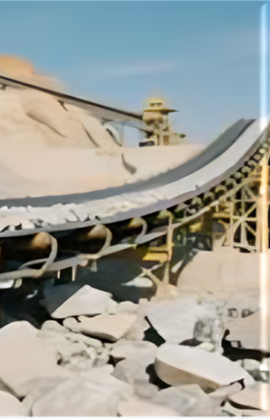
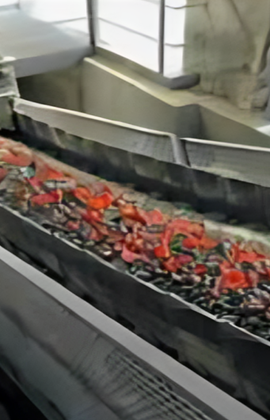
In industries where materials are sharp, heavy, or jagged, standard conveyor belts degrade rapidly. Abrasion-Resistant Conveyor Belts are specifically engineered to withstand the constant friction and surface wear caused by transporting "harsh" materials like crushed rock, ore, glass cullet, and scrap metal.
When the temperature of your payload exceeds 60°C (140°F), standard rubber belts will literally cook—they harden, crack, and eventually lose their structural integrity. Heat-Resistant (HR) Conveyor Belts are the solution for high-temperature environments, using specialized synthetic rubbers like EPDM to prevent "heat aging."
When you combine high impact with extreme abrasion, you are dealing with the most punishing environments in material handling. Standard belts don't just wear down here—they get punctured, ripped, or "chunked" by the sheer force of falling heavy material.
High-Impact Abrasion-Resistant Belting is the "heavy armor" of the conveyor world.
In underground mining, power plants, or grain elevators, a conveyor belt can act as a massive fuse, carrying fire from one part of a facility to another. Flame-Resistant (FR) Conveyor Belts are engineered with self-extinguishing properties to prevent a small friction fire from turning into a catastrophic disaster.
When transporting materials saturated with oils, fats, or greases, a standard rubber belt will undergo "swelling." The oil penetrates the rubber, causing it to expand, lose its tension, and eventually peel away from the internal carcass. Oil-Resistant (OR) Conveyor Belts use synthetic polymers like Nitrile (NBR) to remain chemically stable in these environments.
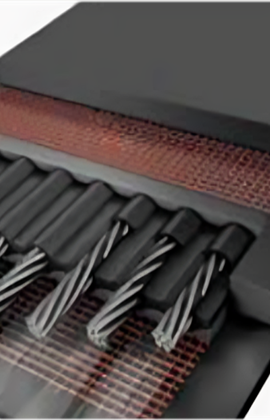
When the distance is long, the lift is high, and the load is immense, fabric-reinforced belts reach their physical limits. Steel Cord Conveyor Belts replace fabric layers with high-tensile steel cables, providing the ultimate solution for heavy-duty, long-haul material transport.
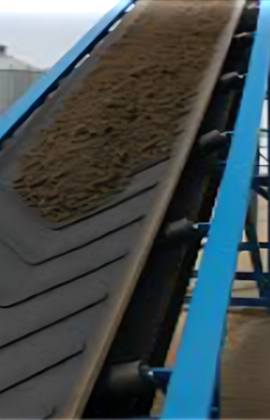
When the angle of inclination becomes too steep for a flat belt (typically above 18°), materials begin to slide or roll back. Chevron and Cleated Belts solve this by using molded profiles that "trap" the material, allowing for high-capacity transport at steep angles up to 45°.
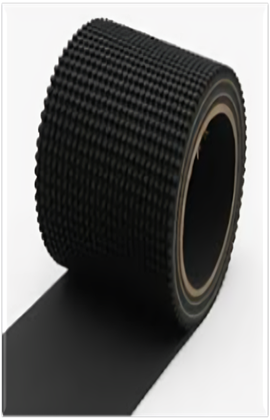
When your application involves light-weight goods, fragile items, or steep inclines that don't require heavy cleats, Rough Top Conveyor Belts provide the necessary friction. Often called "Grip Top" belts, they feature a deeply textured surface that prevents slipping by creating a high-coefficient of friction between the belt and the product.
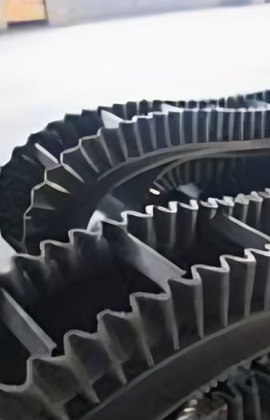
When space is at a premium and you need to move material vertically or at extremely steep angles (up to 90°), Sidewall Conveyor Belts are the ultimate solution. By combining a flat base belt with flexible corrugated side walls and horizontal cleats, these belts create a moving "bucket" that contains material completely.
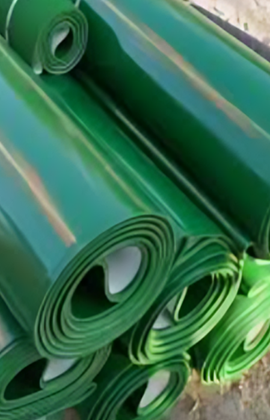
While rubber belts dominate heavy outdoor industries, PVC (Polyvinyl Chloride) Plain Belts are the standard for light-to-medium duty indoor applications. Known for their versatility and hygienic properties, these belts are essentially the "all-rounders" of the manufacturing and packaging world.
Other Products
At Yubhel, we provide a full range of high-quality fabrication and engineering services designed to meet the needs of various industries. Our expertise covers custom metal fabrication, structural and mechanical works, equipment installation, repairs, and industrial project support.